
It’s finally here. After releasing a spate of tantalizing trailers, the long awaited Against the Current featuring Tan Songyan and Liu Xueyi has made its way to our screens. The leads play a formerly betrothed pair who as a result of brutal political realities are separated on the eve of nuptials but come to reunite in unexpected ways later. No doubt the hand of fate is strong in this narrative. The backdrop is the Ming dynasty and even belonging to the upper echelons of that world with a proven record of fealty doesn’t guarantee longevity. Indeed, taking any kind of position in a political dispute long past can come back to haunt you.

Several years after the ignominious end of the Shen clan, Tan Songyan’s character formerly known as Shen Jialan, lives life in recent times as the timid adopted daughter, Xu Lanxiang, of two indentured slaves. Eking out a living among the lowest of the low is hard and they are tethered to their seemingly capricious masters for favour and advancement. The judicious Lanxiang treads carefully once she enters the Lin mansion, cautiously observing her surroundings and trying not to appear too knowledgeable in front of her ruthless mistress. Liu Xueyi is the scion of the Lin family, Lin Jinqi, lately returned from earning merits gaining victories in skirmishes with Japanese pirates. When the elders of his family hastily withdrew from the betrothal with Shen Jialan, he was quickly married off to Zhao Xingtang (Li Meng) who has been withholding conjugal privileges in favour of other men from the start. It’s only come to light more recently why she’s in contempt of her husband in name, who never stood a chance. Now that Jinqi has returned from making his own mark, he is seeking justification to break permanently with his unpleasant wife. Especially because there is no expectation that there will ever be offspring between them. Indeed a man in that society still has to do his duty to his ancestors.
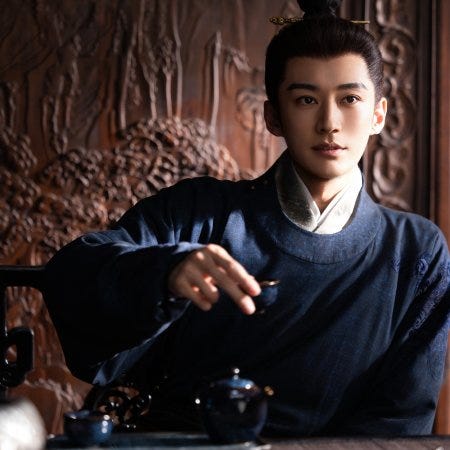
Zhao Xingtang in all likelihood perceives herself as a victim of circumstances to a large degree. It explains why she flouts convention. Not sleeping with her husband is her performative act of rebellion against a marriage she was actively opposed to. It’s performative because she enjoys too much the idea of being a well-heeled mistress of a manor to fully reject the imposition on her liberty that the marriage brings. In fact she isn’t bound by social norms as she is by wealth — an observation that is supported by her unsavoury financial dealings using household funds while keeping a paramour or two on the side. Judging from all the porcelain smashing that occurs, she relishes the role of the tyrannical mistress to reinforce her status. That’s the other side to her performance — wielding power over really vulnerable women in her most terrifying persona. It’s rebellion against her own family with bystanders paying the price. She has no interest in sleeping with her husband (crazy I know) but she’s outraged that other women might want to possibly because it will threaten her position in the household as soon as babies become part of the equation.
Like many C drama villains of a lesser calibre, Zhao Xingtang underestimates her husband-in-name-only in this domestic cat and mouse game. Yes, he’s been away long enough for her to misbehave behind his back but he’s returned determined to clean up because the status quo is a road that leads to nowhere. On top of that, sooner or later, her misdemenours will be the undoing of both families.
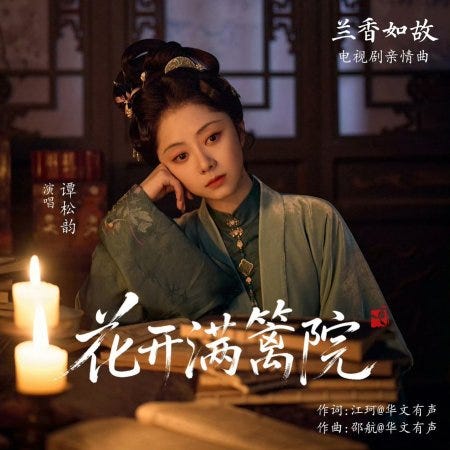
Against the Current is shaping up to be one of the year’s best if it manages to maintain the quality of storytelling shown thus far. (Yes, yes, I’m a broken record on this) Everything about it shouts quality from the production values to how the characters are written and the experience is immersive. Lanxiang is a terrific character who knows her place in this highly class conscious society. Her intelligence is demonstrated effectively by what she chooses not to do in order to protect her family. She sees it all but keeps mum except to keep herself out of harm’s way. She knows better than anyone else what happens when the overlords are offended.
Part of the success of the show especially in this early phase is how it unfolds like a classy soap opera not unlike Downton Abbey but with more draconian punishments in the offing. The Lin-Shen domestic troubles with salacious overtones certainly adds to that feeling of intrigue. Traversing taboos are an invitation for the audience’s baser impulses of curiosity that demand answers from episode to episode.
Earlier I mentioned that the show underpins a strong sense of fate or heaven moving pawns in the background. The emperor who is the primary cause of disrupting the betrothal is possibly set up as a potential big villain of the piece. Yet despite powerful human forces “interfering”, there is a lingering sense that somethings cannot be prevented. Obstacles are not so much impediments as they are detours in preparation for greater challenges to be tackled. Like in The Road to Splendor, success (by any metric) doesn’t come easily especially for the protagonists. Nor should it. If they are to wield power and acclaim that gradually come to them, suffering and struggle are the foundation to building character.
One of the reasons why I wasn’t a fan of the hugely popular The Red Sleeve, the 2021 K drama, was its treatment of maids in the palace. Despite all the lamentation about the unfairness of servitude on the surface, the servant class there was a recruitment drive for a secret society covertly dabbling in palace politics. In Against the Current, servants or indentured slaves are the underclass whose fates are absolutely determined by their masters regardless of gender. What’s also noteworthy is the implication that anyone can be made slaves overnight regardless of status. The happy harmonious prominent Shen family was decimated at the whim of a resentful monarch. For them there would be no means of appeal, no one to come to their aid because the emperor’s word is law regardless of what the actual laws of the land might be.
I persist in my view that even good fiction needs to be grounded in actual history. The past should be a foreign land with different sensibilities about the value of human life. Only then can we be grateful for what we now have and for what gains have been made on our behalf.
If you found this post helpful, please share it where you traverse, like it or leave a comment below. Thanks for giving this your attention.